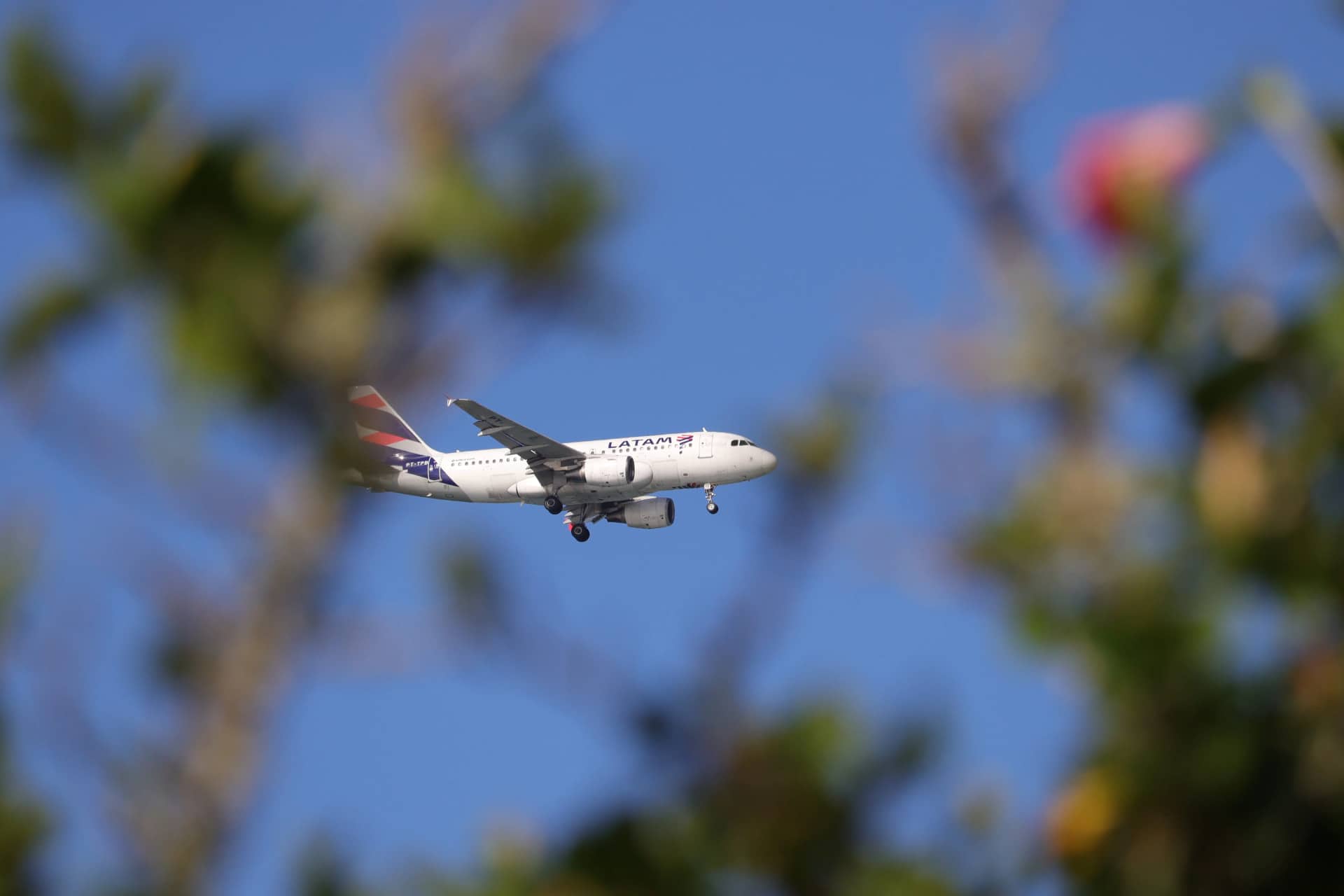

LATAM Airlines: A Detailed Guide to the Airline, Its History, Fleet, Routes, Services and Passenger Experience
LATAM Airlines is not simply another airline operating between South American cities. It is one of the most important aviation groups on the continent, with a network built around connecting South America internally while also linking the region with North America, Europe, Oceania and other international markets.
The airline that passengers see today is the result of decades of aviation history, consolidation and restructuring. Its identity is closely connected with the aviation industries of countries such as Chile and Brazil, while its current network extends considerably beyond those origins.
One reason LATAM can sometimes be confusing for travelers is that "LATAM" is used in several different ways. There is the airline brand passengers see, the wider LATAM Airlines Group, and operating entities associated with different countries. A flight booked through LATAM may therefore involve different operating companies, aircraft types or partner airlines depending on the route.
That complexity is actually part of what makes LATAM interesting.
What exactly is LATAM Airlines?
LATAM Airlines is the principal airline brand of the LATAM Airlines Group, a major South American aviation group.
The group has historically had a particularly strong presence in Brazil, Chile, Peru, Colombia, Ecuador and other Latin American markets. Rather than depending exclusively on one country, its network has developed around multiple major hubs and strategically important cities.
LATAM's own published material describes the group as the largest aviation group in Latin America, while its corporate reporting provides detailed information about its fleet, operations and financial development.
This gives LATAM a different character from a traditional national airline.
A passenger flying from São Paulo to another Brazilian city experiences LATAM differently from someone flying from Santiago to Los Angeles or from Lima to Madrid. The underlying brand is the same, but the aircraft, cabin configuration, route structure and available services can vary considerably.
The history behind LATAM
To understand today's LATAM, it helps to understand that the airline wasn't created overnight.
Its modern identity emerged from the combination of two major South American aviation companies: LAN and TAM.
LAN
LAN was historically associated with Chile and became one of the most significant airlines in Latin America.
Over time, LAN expanded beyond Chile and established operations and subsidiaries across the region.
TAM
TAM, meanwhile, became one of Brazil's largest airlines.
Its enormous domestic Brazilian network gave it an important position in one of the world's largest aviation markets.
Brazil's geography makes aviation particularly important. The country is enormous, and major population centers are separated by distances that make air travel considerably more practical than many land alternatives.
The LAN–TAM combination
The combination of LAN and TAM created what would eventually become LATAM Airlines Group.
The LATAM brand represented something larger than either company's previous identity: an airline group capable of serving multiple South American markets under one recognizable international brand.
This history is still visible today.
For example, the group's operations remain particularly strong in Brazil and Chile, while Peru and other South American countries provide additional network depth.
Why LATAM matters so much in South America
South America is an unusual aviation market.
The continent contains enormous distances, geographic barriers and cities that aren't always connected efficiently by road or rail.
Consider a traveler moving between:
- Santiago
- Lima
- São Paulo
- Buenos Aires
- Bogotá
- Rio de Janeiro
- Brasília
- Cusco
- Medellín
- Quito
Air travel becomes more than a luxury. For many routes, it is the practical transportation infrastructure connecting major economic and tourism centers.
LATAM's network is designed around precisely this reality.
The airline's destination system currently displays extensive options across South America, including numerous Brazilian cities and destinations in countries such as Argentina, Bolivia and Chile.
LATAM's network
One of LATAM's biggest strengths is the breadth of its network.
The airline operates both domestic and international services.
Domestic South American operations
Brazil represents one of the most important markets in the LATAM network.
The airline's Brazilian destination listings include cities such as:
- São Paulo
- Rio de Janeiro
- Brasília
- Belo Horizonte
- Curitiba
- Florianópolis
- Fortaleza
- Recife
- Salvador
- Manaus
- Porto Alegre
- Goiânia
- João Pessoa
- Maceió
- Londrina
- Campo Grande
and many others.
This matters because LATAM isn't merely an international carrier that happens to fly within Brazil.
It has a substantial domestic network capable of feeding passengers into its international operations.
International destinations
LATAM's international network is equally important.
Depending on the schedule and season, travelers can find LATAM services connecting South America with markets including:
- United States
- Mexico
- Canada through network/partner arrangements
- Spain
- Portugal
- France
- Germany through connecting arrangements
- Italy
- United Kingdom through partnerships
- Australia
- New Zealand
- Caribbean destinations
- other Latin American countries
The exact route map changes over time.
This is important when researching a particular LATAM route: an old article may describe a route that no longer operates, while a newer schedule may contain newly introduced services.
For that reason, LATAM's current destination search should be treated as the authoritative source for whether a specific route is available.
LATAM's major hubs
LATAM doesn't function like an airline built around one single airport.
Its network uses several important South American hubs.
Among the most significant are:
São Paulo
São Paulo is arguably one of the most strategically important locations in the LATAM system.
Guarulhos International Airport provides access to Brazil's largest metropolitan area and serves as a major international gateway.
For travelers arriving from Europe, North America or elsewhere, São Paulo can function as a connection point into Brazil.
Santiago
Santiago is another fundamental part of LATAM's network.
Chile's geographical position makes Santiago especially useful for connections between South America and international destinations across the Pacific and Americas.
Lima
Lima is particularly valuable as a connecting point because of Peru's geographic position on the western side of South America.
It provides access to destinations throughout Peru and international connections across the Americas.
Bogotá
LATAM's Colombian operations also contribute to its broader South American network.
LATAM's fleet
The aircraft used by LATAM vary significantly according to the route.
Its fleet includes both narrow-body and wide-body aircraft.
According to LATAM Airlines Group's published fleet information, the group operates aircraft from both Airbus and Boeing families, including Airbus A319, A320, A321 and A320neo-family aircraft as well as Boeing 787 and other Boeing wide-body aircraft. Its cargo operation also includes Boeing 767 freighters.
A 2025 LATAM fleet report listed 348 aircraft at the end of the first quarter, including passenger and cargo aircraft.
That is a substantial fleet.
Airbus aircraft
LATAM uses several Airbus models for shorter and medium-distance operations.
Airbus A319
The A319 is one of the smaller aircraft in the fleet.
It is particularly suitable for routes where passenger demand doesn't justify a larger aircraft.
Airbus A320
The A320 family forms an important part of LATAM's narrow-body operation.
It is well suited to domestic and regional routes.
Airbus A321
The A321 provides greater passenger capacity than the A319 and A320.
That makes it useful on busy domestic and regional routes where the airline wants to carry more passengers without moving to a wide-body aircraft.
Airbus A320neo and A321neo
The "neo" generation represents a newer generation of Airbus aircraft.
These aircraft incorporate newer engines and aerodynamic improvements intended to improve fuel efficiency.
LATAM's fleet plans have included continued growth of the Airbus neo family.
Boeing 787 Dreamliner
For long-distance international flights, one of the most recognizable LATAM aircraft is the Boeing 787 Dreamliner.
The 787 is designed specifically for long-distance operations.
Its characteristics make it suitable for routes connecting South America with distant international destinations.
LATAM operates both 787-8 and 787-9 aircraft. The group's published fleet information lists these variants among its wide-body passenger aircraft.
For a passenger, however, the aircraft model alone doesn't tell the complete story.
Two LATAM 787 flights can feel somewhat different depending on:
- cabin configuration
- seat selection
- route
- aircraft
- service class
- flight duration
- entertainment system
- catering
- operating company
This is why checking the actual aircraft assigned to your itinerary can be useful.
LATAM's cargo operation
LATAM isn't only a passenger airline.
Cargo transportation is an important part of the group's aviation business.
The group operates Boeing 767-300F freighters, specifically designed for cargo operations. LATAM's corporate fleet information lists dedicated cargo aircraft alongside its passenger fleet.
Cargo operations are particularly important in South America because air freight connects businesses and markets where other transportation methods may take substantially longer.
LATAM travel classes
LATAM's available cabin experience depends heavily on the aircraft and route.
Generally, travelers may encounter:
- Economy
- Premium Economy on selected aircraft/routes
- Business Class
The exact product can differ.
This is something travelers should understand before purchasing a ticket.
A "Business Class" label doesn't automatically mean every LATAM aircraft provides exactly the same seat, bed configuration or onboard experience.
Long-haul wide-body aircraft can provide a considerably different experience from shorter regional flights.
Economy Class
Economy is the most common cabin for LATAM travelers.
The basic experience typically revolves around:
- assigned or selected seating
- carry-on allowance depending on fare
- checked baggage depending on fare
- onboard service depending on route
- entertainment on selected aircraft
- optional additional services
One major point is that LATAM, like many modern airlines, uses different fare families.
The cheapest ticket isn't necessarily equivalent to a more flexible fare.
A traveler might pay a lower base price but then discover that:
- checked baggage costs extra
- seat selection costs extra
- changes are restricted
- refunds aren't available
- certain benefits aren't included
Therefore, comparing the total trip cost, rather than simply the advertised fare, is often smarter.
Premium Economy
Premium Economy can provide an intermediate experience between standard Economy and Business Class on aircraft and routes where it is offered.
The precise benefits depend on the flight.
Travelers should verify the specific aircraft and fare conditions before assuming that Premium Economy means the same thing on every route.
Business Class
LATAM Business Class is primarily relevant on longer international operations and selected aircraft.
The experience can include:
- larger seating
- enhanced meal service
- priority airport services
- increased baggage benefits
- lounge access where applicable
- greater privacy on certain aircraft
- improved sleeping arrangements on long-haul aircraft
The exact seat design varies according to aircraft.
This is one of those situations where the aircraft type matters enormously.
A passenger booking Business Class should look at the aircraft and seat map rather than relying only on the cabin name.
LATAM Pass
LATAM Pass is LATAM's frequent-flyer and loyalty program.
It is one of the most important components of the airline's customer ecosystem.
The program currently has four Elite categories:
- Gold
- Platinum
- Black
- Black Signature
LATAM discontinued the Gold Plus category beginning in 2025.
This distinction is important because LATAM Pass effectively has two different concepts:
LATAM Pass Miles
These are primarily used for redemption.
They can be used for things such as flights and selected travel-related products and services.
Qualifying Points
Qualifying Points are associated with elite-status qualification.
They help determine whether a member can maintain or move to a higher elite category.
LATAM explicitly distinguishes Miles from Qualifying Points.
That distinction can confuse new members.
Think about it this way:
Miles = currency you can redeem.
Qualifying Points = progress toward status.
They are not interchangeable.
LATAM Pass Club
LATAM also offers a subscription-based loyalty product called Club LATAM Pass.
The airline currently describes two plans:
- Basic
- Prime
Members can receive monthly miles and additional benefits, with optional Boosters available to increase certain benefits.
The Club is currently available in selected Latin American markets including Chile, Argentina, Peru, Ecuador, Uruguay and Colombia.
This makes the loyalty program more than a simple "fly and collect points" system.
LATAM's airline partnerships
Modern airline networks aren't built exclusively around flights operated by one carrier.
LATAM therefore has partnerships and codeshare relationships with other airlines.
Depending on the agreement and itinerary, LATAM Pass members may be able to earn miles or qualifying credit when flying partner airlines.
LATAM's current partner information includes relationships involving airlines such as Delta, Aeroméxico, Alaska Airlines, British Airways, Iberia, Japan Airlines, Qantas, Qatar Airways, Cathay Pacific and others, with the exact earning rules varying by airline and itinerary.
This is an area where travelers need to read the conditions carefully.
A flight that looks like a LATAM itinerary may actually be:
marketed by LATAM + operated by another airline.
Those two things are not necessarily the same.
Booking a LATAM flight
A normal LATAM booking process involves selecting:
- Origin
- Destination
- Travel date
- Number of passengers
- Cabin
- Fare
- Passenger information
- Optional services
- Payment
But the important part isn't simply finding the cheapest fare.
You should examine what is actually included.
For example:
Ticket A
₹25,000
but:
- no checked baggage
- restricted changes
- paid seat selection
Ticket B
₹29,000
but:
- checked baggage
- seat selection
- better flexibility
Ticket B may actually represent better value for a traveler carrying luggage.
This is a common mistake when comparing airline prices.
LATAM baggage
Baggage rules depend on the fare, route, cabin and operating airline.
There can be differences between:
- personal item
- carry-on baggage
- checked baggage
- additional baggage
- special baggage
The important thing is not to assume that every LATAM ticket includes the same baggage allowance.
A traveler should check the baggage allowance attached to their actual reservation.
That is particularly important on itineraries involving multiple airlines.
Carry-on baggage
Carry-on rules normally involve both:
- a cabin bag
- a smaller personal item
The exact dimensions and weight limitations should be checked against the passenger's itinerary because LATAM's rules can vary depending on fare and route.
Don't rely on a random travel blog from several years ago.
Airline baggage policies change.
Checked baggage
Checked baggage may be included in certain fares and excluded from others.
If it isn't included, the passenger can generally purchase an additional baggage allowance.
For international trips, baggage charges can become significant, which is why it is worth calculating them before completing a booking.
Special baggage
Passengers traveling with:
- sports equipment
- musical instruments
- oversized baggage
- fragile items
- mobility equipment
may have additional requirements.
The safest approach is to check LATAM's current baggage rules for the exact item before arriving at the airport.
Online check-in
Online check-in is one of the simplest ways to reduce time spent at the airport.
LATAM provides online travel-management tools through its website, including check-in and flight-status functions.
The passenger generally needs reservation information and personal details to retrieve the booking.
After check-in, the traveler can obtain the boarding pass where supported.
However, some passengers may still need to visit an airport counter.
For example:
- checked baggage
- document verification
- special assistance
- international travel documentation
- certain itinerary restrictions
can require airport processing.
LATAM flight status
Flight status becomes particularly important on the day of travel.
A flight can change because of:
- weather
- aircraft rotation
- airport restrictions
- operational issues
- air-traffic control
- crew limitations
- technical problems
LATAM provides a flight-status function through its website.
For a traveler, checking the flight status before leaving for the airport is a sensible habit.
Changing a LATAM reservation
Whether a LATAM ticket can be changed depends heavily on the fare conditions.
Some fares offer greater flexibility than others.
Possible consequences of changing a ticket include:
- fare difference
- change fee
- additional service charges
- restrictions on the new flight
The key mistake is assuming:
"I bought a LATAM ticket, so I can change it whenever I want."
That's not necessarily true.
The fare rules attached to the ticket determine what you can do.
Cancelling a LATAM flight
Cancellation is another area where the specific fare conditions matter.
A ticket can potentially be:
- refundable
- partially refundable
- non-refundable
- eligible for credit under certain circumstances
- subject to special rules imposed by local law
There can also be a major distinction between:
Passenger-initiated cancellation
You decide not to travel.
Airline-initiated cancellation
LATAM cancels or substantially changes the flight.
These situations can produce completely different rights and remedies.
What happens when LATAM cancels a flight?
When an airline cancels a flight, passengers may be offered options depending on the circumstances and applicable regulations.
Possible solutions can include:
- rebooking
- alternate flight
- refund
- other forms of assistance where applicable
The exact entitlement depends on the country, route, reason for disruption and applicable passenger-rights regulations.
This is why travelers shouldn't rely on a generic "LATAM cancellation policy" page alone.
The jurisdiction matters.
LATAM customer support
LATAM maintains a Help Center that provides information about:
- reservations
- flight status
- LATAM Pass
- baggage
- changes
- claims
- contact channels
- travel requirements
The official Help Center also provides a route to contact-center information, offices and case submission.
This is particularly useful because airline contact information can differ by country.
A passenger in Brazil shouldn't automatically use a number found on a Chilean travel website.
Why fake LATAM contact numbers are a problem
This deserves special attention.
LATAM is a major airline, which means its name is frequently used by unofficial websites pretending to provide "customer support."
A passenger searching Google for:
LATAM customer service
may encounter:
- unofficial travel agencies
- advertising pages
- outdated phone directories
- third-party booking sites
- websites using airline branding
- potentially fraudulent support pages
The safest starting point is LATAM's own Help Center and official website.
Don't provide payment-card information to an unknown person simply because they claim to be "LATAM support."
LATAM's digital ecosystem
LATAM has increasingly moved routine passenger management online.
Passengers can use the airline's website for tasks such as:
- booking
- managing trips
- checking flight status
- checking in
- accessing LATAM Pass
- reviewing destinations
- requesting assistance
- creating support cases
The airline's current Help Center explicitly provides access to trip management, flight status, check-in, destinations and customer-case functions.
This means passengers don't necessarily need to call a contact center for every minor issue.
LATAM and customer cases
LATAM's Help Center includes a mechanism for creating a case and checking the status of an existing case.
This is particularly useful for issues that aren't easily resolved through a phone conversation.
For example:
- baggage complaints
- refund questions
- service complaints
- documentation
- missing loyalty credit
- travel disruption cases
The important thing is to keep your case number and supporting documents.
What makes LATAM different from many other South American airlines?
The simplest answer is scale and network structure.
LATAM isn't built around one country alone.
It has significant operations across multiple South American markets and an international network extending far beyond the continent.
That gives it several advantages.
Network connectivity
A traveler can potentially use LATAM for both domestic and international portions of a journey.
Multiple hubs
Different South American cities can function as connection points.
Large fleet
The group operates hundreds of aircraft across passenger and cargo operations.
Loyalty ecosystem
LATAM Pass gives frequent travelers an incentive to consolidate travel with the airline.
Partnerships
Partnerships extend the effective network beyond flights physically operated by LATAM.
LATAM for international travelers
For someone visiting South America for the first time, LATAM can be particularly useful.
Imagine a traveler arriving from Europe into São Paulo.
They might then continue to:
São Paulo → Lima → Cusco
or:
São Paulo → Santiago
or:
São Paulo → another Brazilian destination.
Alternatively, a traveler arriving into Santiago might continue to another part of South America.
The value comes from network connectivity.
LATAM for business travelers
Business travelers often care about different things than leisure travelers.
They may prioritize:
- schedule frequency
- flexibility
- airport location
- connections
- loyalty benefits
- lounge access
- baggage allowance
- priority services
LATAM's network makes it particularly relevant for people who regularly travel between South American business centers.
For a person flying occasionally, the cheapest fare might matter most.
For someone flying twenty or thirty times per year, the entire ecosystem can matter more.
LATAM for tourists
Tourists may value LATAM differently.
For leisure travelers, important factors can include:
- destination availability
- price
- baggage
- connection time
- schedule
- seat selection
- cancellation flexibility
A tourist planning a multi-city South American trip can sometimes benefit from LATAM's network because the airline serves a large number of destinations throughout the continent.
LATAM's environmental direction
Modern airlines face pressure to reduce environmental impact.
LATAM has included environmental, social and governance issues within its corporate reporting.
Its 2024 Integrated Report specifically highlighted advances in ESG dimensions alongside financial and operational performance.
Fleet modernization also matters here.
Newer aircraft such as Airbus A320neo-family aircraft are designed to use fuel more efficiently than older generations.
However, aviation remains an emissions-intensive industry, so it would be misleading to describe newer aircraft as making air travel environmentally neutral.
LATAM after the pandemic era
The pandemic fundamentally changed the aviation industry.
Airlines had to deal with:
- grounded aircraft
- collapsing passenger demand
- liquidity pressure
- route suspensions
- restructuring
- changing travel patterns
LATAM was among the major airlines affected.
The group subsequently went through a major financial restructuring process.
Its later corporate reporting emphasizes profitable growth, investment in customer and employee experience and strengthening the company following the difficult pandemic period.
This period is important because the LATAM of today is not simply the same company operating under normal conditions as it did before 2020.
The airline's network, fleet strategy and financial structure have evolved.
LATAM's financial position and growth strategy
Airlines operate on extremely thin margins compared with many other industries.
Fuel prices can change rapidly.
Aircraft are expensive.
Airport fees are substantial.
Labor is a major cost.
Aircraft maintenance is unavoidable.
A small change in passenger demand can have a large effect on profitability.
LATAM's recent corporate reporting has emphasized profitable growth and continued investment in its operation.
Its fleet plans also demonstrate an intention to expand and modernize the fleet over the coming years. The 2025 fleet plan projected continued growth in the passenger fleet and additional neo-family aircraft.
A closer look at the passenger experience
The LATAM experience isn't one single thing.
It changes according to the journey.
A short domestic A320 flight may feel very different from a ten-hour 787 international flight.
Likewise:
Economy + short route
is completely different from:
Business Class + long-haul 787.
That distinction matters when reading reviews.
Someone saying:
"LATAM was excellent."
may have flown an international premium cabin.
Someone saying:
"LATAM was disappointing."
may have flown a short domestic economy sector.
Both experiences can be genuine.
LATAM's biggest strengths
If I had to summarize the airline's strongest characteristics, I'd put them into several categories.
1. Strong South American presence
LATAM has one of the broadest networks on the continent.
2. Large fleet
Hundreds of aircraft provide considerable operational scale.
3. International reach
The airline connects South America with major international markets.
4. Multiple hubs
Its network isn't dependent upon one airport.
5. Loyalty program
LATAM Pass gives frequent travelers a structured rewards system.
6. Partner network
Codeshares and partner relationships extend the airline's effective reach.
7. Modern aircraft investment
The airline continues to add newer aircraft and expand its neo-family fleet.
Things passengers should watch carefully
LATAM is a major airline, but that doesn't mean every ticket or every itinerary will be ideal.
Travelers should pay particular attention to:
Fare restrictions
Cheap fares can come with fewer included services.
Baggage
Don't assume a checked bag is included.
Aircraft type
Different aircraft provide different cabin experiences.
Operating carrier
A LATAM-marketed itinerary can involve another airline.
Connection time
A cheap itinerary with a very short connection can create unnecessary stress.
International documentation
The airline can sell you a ticket, but the passenger remains responsible for meeting immigration and entry requirements.
Schedule changes
Airline schedules can change after booking.
LATAM Pass: who should actually use it?
If you fly LATAM once every three years, the loyalty program may not be a major factor.
But if you regularly travel through South America, it becomes much more interesting.
A frequent traveler can potentially earn:
- LATAM Pass Miles
- Qualifying Points
- elite status
- additional benefits
The airline currently separates redeemable miles from status-qualifying points, so understanding both systems is essential.
For someone who flies frequently, loyalty benefits can sometimes be worth more than a small difference in ticket price.
The real personality of LATAM
There is something interesting about LATAM as an airline.
It isn't simply trying to be "the Chilean airline" or "the Brazilian airline."
Its identity is deliberately regional.
The name LATAM itself reflects this wider Latin American positioning.
Its network, branding and corporate structure attempt to represent a broader South American aviation identity.
That is one reason the airline can feel simultaneously familiar and different depending on which country you're traveling through.
LATAM in simple terms
If we strip away all the corporate language, LATAM can be understood like this:
LATAM is a large South American airline group whose strength comes from connecting multiple countries rather than depending on one national market.
It combines:
domestic flights + regional flights + long-haul international flights + cargo + loyalty programs + airline partnerships.
Its large Airbus and Boeing fleet allows it to serve everything from short domestic routes to intercontinental services.
And LATAM Pass creates another layer around the airline by rewarding frequent customers.
Final assessment
LATAM Airlines is one of the central players in South American aviation.
Its importance comes less from a single spectacular feature and more from the combination of several things:
scale, geography, fleet, connectivity, partnerships and loyalty.
Its South American network gives it an advantage that is difficult for smaller carriers to reproduce. A traveler can use LATAM for a short domestic flight, a regional connection and a long international journey while remaining within the same broader airline ecosystem.
The fleet is also diverse. Airbus narrow-body aircraft handle much of the regional and domestic workload, while Boeing wide-body aircraft such as the 787 serve longer international routes. The group also operates dedicated Boeing 767 freighters for cargo.
For passengers, however, the smartest way to evaluate LATAM isn't simply to ask:
"Is LATAM a good airline?"
The better question is:
"Is this particular LATAM itinerary, fare, aircraft and cabin right for my trip?"
That distinction can make a huge difference.
A short domestic economy flight, a long-haul Dreamliner journey and a Business Class international itinerary are three very different LATAM experiences.
And because LATAM's fares, schedules, aircraft assignments, baggage conditions and partner arrangements can change, travelers should always verify the details against their actual reservation and LATAM's current official information. The airline's Help Center provides the current tools for managing trips, checking flight status, accessing LATAM Pass, contacting the airline and submitting cases